Acne scars form when deep spots damage the skin and it heals unevenly. The good news is that most scarring can be noticeably improved with the right treatment plan, though it usually takes a course of treatments rather than a single session.
Marks or scars?
Not every mark left by a spot is a scar. Flat brown, red or purple marks are usually post-inflammatory pigmentation or redness. These often fade on their own over months, helped along by sun protection and ingredients like azelaic acid, vitamin C or niacinamide.
True scars change the texture of the skin: they’re dented (atrophic) or raised (hypertrophic or keloid). These need treatment to remodel the skin.
Types of acne scars
- Ice pick scars: narrow, deep holes that look like large open pores
- Boxcar scars: wider dents with sharp edges
- Rolling scars: broad, shallow dips that give skin a wavy look
- Raised scars: firm, lumpy scars, more common on the chest, back and jaw
Most people have a mix, which is why combining treatments usually works best.
Treat active acne first
Treating scars while spots are still forming is like repainting during a leak. If you still get regular breakouts, see your GP or a dermatologist about prescription options first. Many scar treatments, especially microneedling and lasers, can’t be done over active acne.
Treatment options
- Microneedling: stimulates collagen to lift rolling and boxcar scars, with a course of several sessions.
- RF microneedling: adds heat for deeper remodelling and is often used for moderate scarring.
- Chemical peels: light peels help with marks and texture, while medium peels and targeted TCA applications (sometimes called TCA CROSS) can help ice pick scars. These deeper techniques should be done by medical practitioners.
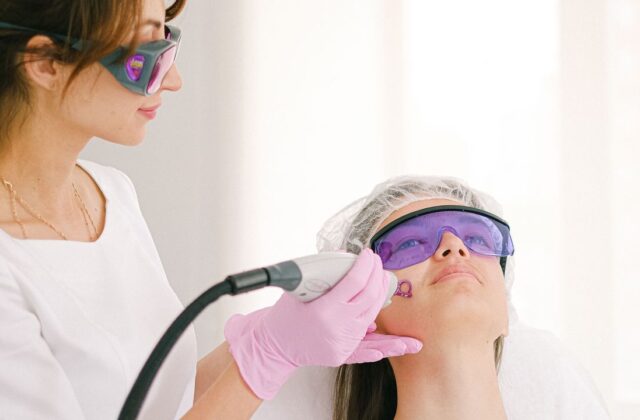
- Laser resurfacing: fractional lasers remove or heat tiny columns of skin to trigger repair. They can be very effective but need more downtime and expert care, especially on darker skin.
- Subcision: a needle is used under the skin to release the bands that pull rolling scars down. It’s done by doctors.
- Dermal fillers: can temporarily raise individual rolling scars.
- Steroid injections: used by medical professionals to flatten raised scars.
What results can I expect?
Most people see a gradual improvement in depth and texture over several months, often in the range of a noticeable softening rather than complete removal. Your practitioner should give you a realistic idea at your consultation and may take photos to track progress.
Darker skin tones
People with darker skin are more likely to develop pigmentation after heat-based treatments or strong peels. Microneedling is often a good starting point, and any laser should be chosen and set by someone experienced in treating your skin type.
How much does acne scar treatment cost in the UK?
Microneedling usually costs £120 to £300 per session, RF microneedling £250 to £600, and fractional laser treatments from around £300 upwards. Because several sessions are usually needed, many clinics offer packages after a consultation.
Find acne scar treatment near you
Browse skin specialists and aesthetic clinics in your area. Look for practitioners who show before-and-after results for scarring and offer a proper consultation.
Frequently asked questions
Can acne scars be removed completely?
Rarely. Most treatments aim to make scars noticeably shallower and less visible. Many people are very happy with the improvement after a course of treatment.
What is the best treatment for acne scars?
It depends on the type of scar. Rolling and boxcar scars often respond well to microneedling or laser, ice pick scars to targeted peels, and raised scars to steroid injections. A combination usually works best.
How long does it take to treat acne scars?
Expect several months. Most plans involve three to six sessions spaced a month or more apart, with collagen continuing to build for months afterwards.
Do dark marks from spots count as scars?
Usually not. Flat dark or red marks are often temporary pigmentation and can fade with time, sun protection and the right skincare.
Can I treat acne scars at home?
Skincare can help marks and overall texture, but home products cannot remodel deep scars. Avoid using home dermarollers on active spots, as this can make things worse.
Will my acne scars come back after treatment?
Improvements in scars are generally long-lasting. New scars can form if active acne returns, so keeping acne under control matters.
This guide is general information to help you understand the treatment and ask the right questions. It isn’t medical advice. Prices are typical UK ranges in 2026 and vary by clinic, area and the product used. If you have a skin condition, are pregnant or take regular medication, speak to your GP or a qualified practitioner first.